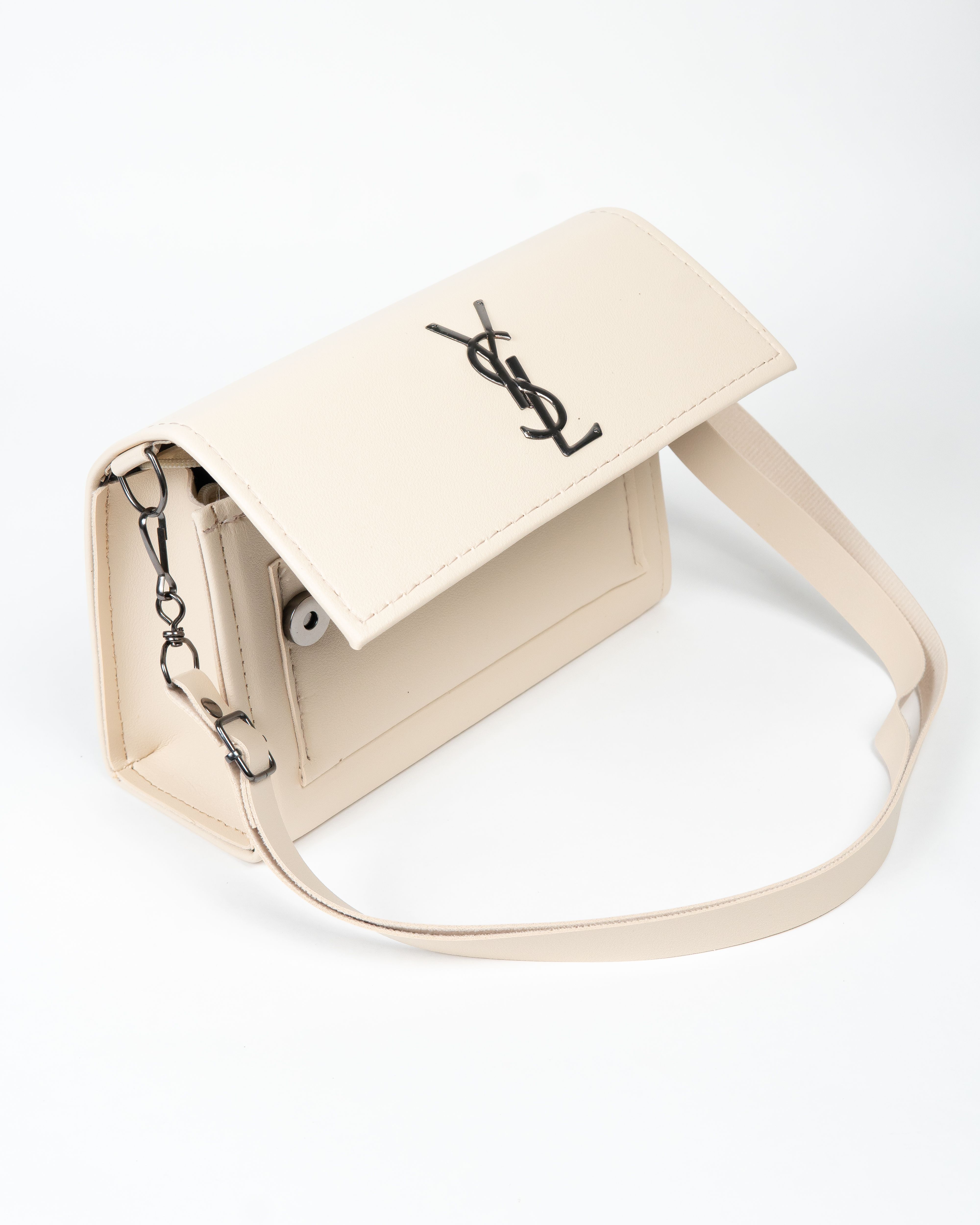
Why There Is No Logo on The Row Bags: How the Design Language Works
Handle a bag from The Row and the first thing you register is something missing. Nothing is printed as a monogram, no plaque is bolted to the front panel, and no oversized initial swings from a handle. The label was founded in 2006 by Mary-Kate and Ashley Olsen and named after Savile Row in London, and that reference is not decorative packaging — it is a construction brief. Cut, cloth and hand finishing, not a badge, are what make a Savile Row jacket recognisable, and the leather goods inherit the same logic. Everything downstream is touched by that choice: silhouette, hardware finish, lining and the way the bags behave on the observed 2026 market. What follows is a design-led row bags overview rather than a shopping list, examining the specific choices that carry identity once the logo is stripped out.
The Absence Is the Argument
A logo does quiet work for a handbag, which is exactly why removing it is anything but neutral. A logo states the price bracket at ten paces, flatters its owner by broadcasting the purchase, and lets mediocre construction hide behind a famous symbol. Remove that and each of those jobs must be reallocated to something physical. Now the shape has to carry at a distance, the leather has to look expensive to a stranger who could not name the brand, and the seams have to stand up under close inspection. That is why the row bags are so frequently cast as difficult to photograph and easy to recognise in person. The design language amounts to a series of substitutions, each one costing money that a printed monogram would have saved.
What Replaces the Monogram
Recognition on a row bag comes down to three things: silhouette, proportion and construction. Silhouette is the outline you register before any detail resolves, and it performs the work a logo normally does. Proportion means the internal rhythm of that outline: how width, depth and handle drop sit together, and why one crescent shape looks considered while another looks generic. Construction confirms the first two once the bag is in your hands, by designer tote bags way of stitch density, edge finishing and the way panels meet. Not one of these can be added late or applied as a sticker at the end. Because they are decided at the pattern stage, the approach is costly to copy and difficult to fake.
Silhouette Does the Work of a Name
The catalogue is organised by shape names rather than seasonal collections, and buyers deploy those names the way they would use a monogram. Margaux, Park, Half Moon and the 90’s Bag carry the line, each its own geometric idea rather than a variation on one theme. The Half Moon is a shallow crescent, listed officially at 8 x 13.5 x 2.5 inches; published dimensions differ between sources, so take the figure as an official reference point rather than a final number. The Soft Margaux 10 comes in at 10 x 7 x 7.5 inches with a five-inch handle drop, which gives it a squared, upright stance no soft hobo can imitate. At 14.75 x 9 x 5 inches, with elongated tubular handles and narrowed gusseted side panels, the Margaux Shoulder 12 is a different animal altogether despite the shared family name. When the outlines are legible to you, the row bag in front of you identifies itself without a word of branding.
A few silhouette cues are worth learning first, because they recur across the line:
- Belted side gussets and protective metal feet on the Soft Margaux family
- Elongated tubular handles carrying signature adjustable buckles on the Margaux Shoulder 12
- A tall and narrow upright body on the N/S Park Tote against the wider standard Park Tote
- A hinged frame closure plus a hidden adjustable strap on the Bourse Clutch
- A shallow crescent on the Half Moon, cut far flatter than the conventional hobo
The Number Means Inches
The second replacement for branding is arithmetic, and it is unusually literal here. That number beside a model name is the bag’s width in inches; it is neither a collection code nor a marketing tier. Margaux 10, 12, 15 and 17 rise in exact inches, and so do India 10.00, 12.00 and 15.75, Agnes 12 and 15, Sofia 8.75 and 10, and Marlo 12 and 14. Because the products photograph almost identically across sizes, that convention earns its keep: it gives buyers a shared vocabulary that works with no images at all. It also underlines the point of the design language, since the naming describes the object instead of dressing it up. Offer a buyer dimensions rather than a story and you are asking to be judged on the object itself.
Two Stamps, Both Deliberately Small
The bags are not literally unmarked, but the marking is tuned to be found rather than seen. A small exterior stamp sits low on the side of the bag, sized and placed so that it blends into the leather rather than announcing itself. A second stamp sits inside, centred and crisp, reading the logo and the words Made in Italy. You can find that interior mark on the brand’s own product pages for the Half Moon, the Soft Margaux 10 and 12, the Margaux Shoulder 12, the Bourse Clutch, the Terrasse To-Go and the Large Slouchy Banana. That placement logic sits neatly with the rest of the row fashion vocabulary, since the information is available to anyone paying attention and invisible to everybody else. It is branding as a footnote rather than a headline, and it is the closest the bags come to signing their own work.
The Luxury Faces Inward
Hardware is where most labels compensate for restraint elsewhere, usually with polished gold that catches light across a room. The Row does the opposite, specifying palladium-plated hardware in a matte or brushed finish that deliberately refuses to shine. What you get is metal that reads as weight and precision rather than as jewellery, and it ages without the scratch map that mirror-polished plating accumulates. The same rule applies to the linings, which are treated as materials in their own right instead of canvases for repeated logo jacquard. Doing that job are nappa, lambskin, calfskin and cotton herringbone, including the cotton herringbone lining in the Soft Margaux 10 and the full lambskin lining in the Margaux Shoulder 12. The same restraint carries into the label’s shoes, where a plain last and an unadorned toe carry the identity, which is the strongest evidence that the no-logo position is a house philosophy rather than a bag-department decision.
The Price of the Quiet
None of this is free, and the observed 2026 market prices show where the money goes. Pattern work, hide selection, hand-finished edges and hardware with no decorative function are what the buyer is paying for, and not one of them yields a recognisable badge. Selling that proposition is hard, and it explains why the range runs unusually wide rather than clustering around a single hero price. The table below places anchor models against the detail that identifies them in place of a logo, using observed 2026 market prices rather than an official price list, which the brand does not publish. Take the right-hand column as the real branding, because in this system that is exactly what it is. Because the figures shift with stock, region and retailer, read them as a snapshot rather than a fixed tariff.
| Model name | Observed 2026 price | What marks it out instead of a logo |
|---|---|---|
| 90’s Bag | $1,090 | Soft slouched shoulder body and very little seaming |
| Half Moon | $1,390 | Shallow crescent shape, official 8 x 13.5 x 2.5 in |
| Bourse Clutch | $1,590 | Hinged frame closure with nappa lining and a hidden strap |
| N/S Park Tote Small | $1,550-1,620 | Upright body, tall and narrow, unstructured stance |
| Soft Margaux 10 | $3,650 | Belted side gussets, protective metal feet, herringbone lining |
| Margaux Shoulder 12 | $4,900 | Tubular handles, buckles that adjust, full lambskin lining |
Reading the Design Language in the Real World
If you are learning row handbags at this level, the useful skill is not memorising names but learning to look in the right order. Start with the outline, then check proportion against the inch number in the model name, then move to the seams and the edges. Next is hardware, assessed on weight and finish instead of shine; the lining comes last because its job is to confirm rather than to introduce. The sequence also guards you when a row bag is offered secondhand, because counterfeits reproduce shapes far more easily than they reproduce edge finishing and matte plating. Those habits are worth taking into any listing of the row for sale, since photographs flatten exactly the qualities that matter most. Once you have learned the grammar, the whole catalogue becomes legible, which is precisely what a design language without a logo asks of you.
]]>Bottega Desires Sizing: Essentials to Consider Before Purchasing
The query that keeps surfacing in forums and comment sections is simple: what is Bottega Desires, and how does its sizing actually work? That’s because purchasing a hoodie sight unseen is always a small gamble, especially true when the sizing doesn’t match your assumptions. The brand has developed a loyal base thanks to streetwear essentials such as hoodies, shirts, shorts, and jorts. Here we cover buyer feedback, pre-order checks, and how this brand’s sizing stacks up against bigger names.
Whether you’re checking out your first-ever Bottega Desires hoodie or perhaps you’ve already got a few items of Bottega Desires clothes in your closet, sizing confusion is one of the most common reasons for returns and exchanges. Getting it right the first time helps you avoid shipping costs, waiting time, and the disappointment of a hoodie that bunches around the shoulders or hangs past your hips. Here’s what you need to know.
Bottega Desires, Defined—and The Reason Fit-Related Concerns Keep Surfacing
Carving out a niche with oversized hoodies, graphic shirts, loose-fit shorts, and jean-style jorts, Bottega Desires serves as a urban apparel line created for buyers chasing a bold, statement-driven aesthetic. Unlike traditional tailoring houses, the brand leans into roomy, drop-shoulder shapes, which is the very reason sizing questions are front and center in every Bottega Desires review you’ll find online. Customers who typically order their usual size often find themselves with either the wrong proportions or a happy surprise, depending on what look they were going for, because a hoodie cut with a dropped shoulder seam and extra room through the body doesn’t behave like a standard fitted crewneck.
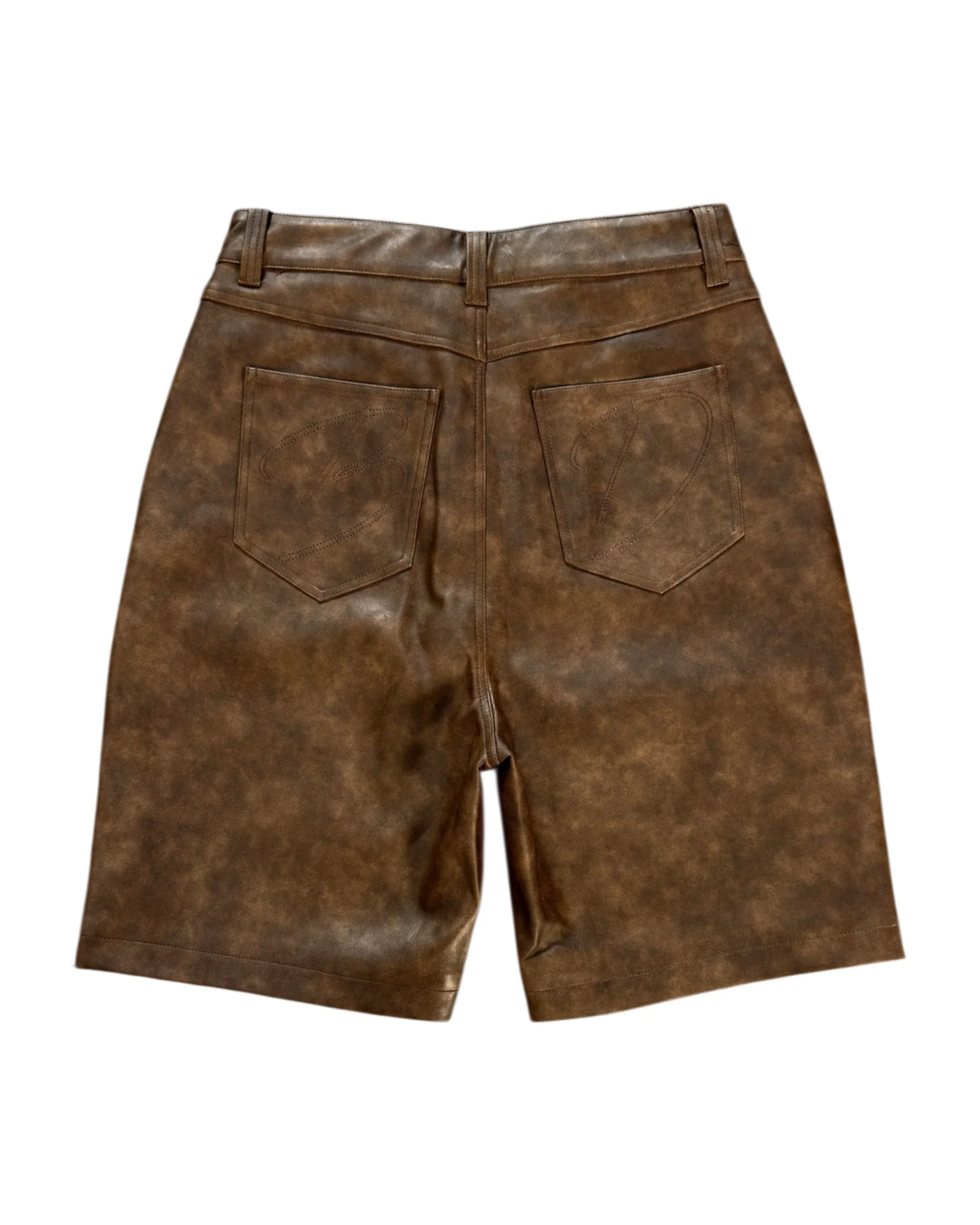
Given that the brand’s naming bears a resemblance to Bottega Veneta, a long-established Italian fashion house, shoppers commonly wonder whether the two are connected. They are not the same brand, and recognizing this split is essential when you’re comparing sizing charts, return policies, or price points. Bottega Desires operates in the streetwear and casualwear space, while the Bottega Veneta Desires search trend is mostly bottega desires shorts driven by people attempting to determine if there’s a licensing tie-in or collaboration. As things stand in 2026, no formal collaboration has been publicly verified, so treat the two as separate entities when you shop.
Given that streetwear hoodies are often styled to be purposely baggy, sizing questions also surge — which means the „right“ fit comes down to what the wearer likes. Some shoppers lean toward a squared-off, past-the-hip silhouette; others want something closer to a standard crewneck fit that layers well under a jacket. Given that Bottega Desires hoodie cuts tend to favor the oversized style, it pays to consider how you plan to style it before choosing a size.
the Bottega Desires label compared to Bottega Veneta: Untangling the Mystery
Bottega Desires vs Bottega Veneta is one of the most searched search terms, and it deserves a direct answer since these two labels target totally different markets. Bottega Veneta is a high-fashion house known for leather goods, structured tailoring, and a minimalist aesthetic, with sizing that follows conventional European garment standards. Bottega Desires, by contrast, is a streetwear-focused label built around graphic hoodies, shirts, shorts, and jorts with a much more relaxed, youth-driven fit philosophy.
The practical takeaway is that you cannot use a Bottega Veneta size chart to predict how a Bottega Desires hoodie will fit, and vice versa. Construction, fabric weight, and intended shape differ so much that comparing the two is likely to lead you astray. If you’ve worn Bottega Veneta knitwear before and are now considering a Bottega Desires hoodie, treat it as a fresh sizing decision rather than an extension of what you already know.
Making Sense of the Size Chart Before You Buy
Each Bottega Desires clothing listing should feature a size chart showing body measurements in inches or centimeters—by far the most trustworthy tool available to you before completing your order. Don’t rely on the S, M, L, XL labels alone, because those letters mean different things across brands and even across different product lines within the same brand. Instead, grab a tape measure and record your actual chest width, shoulder span, and preferred garment length, then compare those numbers directly against the listed chart.
Pay close attention to the garment measurements versus body measurements distinction. Some charts show the hoodie’s flat-lay measurements, while some instead list the body size it’s designed to fit. A chest measurement of 42 inches on a garment chart, for example, means the hoodie itself is 42 inches around, not that it’s designed for a 42-inch chest — those are two very different numbers, and mixing them up is the most common sizing mistake shoppers make.
Should you be ordering a Bottega Desires shirt together with a hoodie, note that shirts and hoodies from the same brand can be shaped differently, since hoodies usually carry thicker fabric and more room for layering up. Even if a medium shirt fits you just right, it doesn’t mean a medium hoodie will land identically.
Making Sense of Fabric Weight’s Effect on Fit
A hoodie’s material heaviness, generally expressed in GSM (grams per square meter), plays a big role in shaping how a garment hangs and how true to size it comes across. A denser fleece fabric, something in the 400-500 GSM range, is likely to keep its structure and can feel somewhat more tailored, while a lighter-weight blended fabric under 300 GSM will drape closer to the body and may feel roomier than the listed measurements suggest. During your search through Bottega Desires hoodie options, check the product description for material weight and makeup info, since that information often clarifies why two hoodies marked with an identical size can feel noticeably different.
Post-wash shrinkage is a further consideration buyers frequently overlook. Blends leaning heavily cotton can pull in somewhat after several initial launderings, commonly in the range of 3-5% if not washed with the right care. If you’re ordering a hoodie sized near your true body measurements rather than loose-fitting, build in a small margin for shrinkage, or make sure to wash in cold water and lay flat to dry to reduce the effect.
Jorts and Shorts: A Different Sizing Logic
Bottega Desires shorts and Bottega Desires jorts are governed by a different sizing logic than hoodies, since waist size and leg length take priority over shoulder or chest fit. As you look over a shorts or jorts listing, look specifically for waist circumference and inseam length in inches, and compare those against an existing pair whose fit you trust. Jorts made from denim specifically can run stiffer initially and soften with wear, so if you’re caught between sizing options, going a size larger is often the smarter choice for comfort during the first few wears.
Rise height also matters more than people expect. Low-rise jorts will rest differently at the waistline than mid-rise jorts, even if the listed waist figure is identical, so check whether the listing notes the rise if that detail is provided. If it isn’t listed, it’s a good idea to contact customer service before ordering rather than assuming.
Fit Expectations, Category by Category
To make the sizing landscape easier to visualize, here’s an overview of what to expect across different Bottega Desires clothes categories based on common streetwear conventions and buyer-reported experiences.
| Piece | General Fit Profile | Main Measurement to Verify | Fit Advice |
|---|---|---|---|
| Bottega Desires branded Hoodie | Oversized, drop-shoulder | Chest measurement and overall length | Choose a smaller size for a snugger silhouette |
| Shirt by Bottega Desires | Normal through easygoing fit | Chest measurement and shoulder stitching | True to size for most buyers |
| Bottega Desires Shorts | Easygoing cut landing near knee level | Waist size and inseam length | Double-check the inseam before ordering |
| Jorts by Bottega Desires | Firm denim build with a straight-leg cut | Waist, rise, inseam | Anticipate a short break-in phase |
A Few Closing Suggestions Before Purchasing
Ahead of checking out, skim several recent examples of Bottega Desires review feedback if they’re posted on the product page, since authentic shopper feedback often flag whether a piece runs large, small, or true to size. Pictures posted by past buyers can also show how the piece drapes on different body types, which is more helpful than a size chart alone. If the retailer offers a fit questionnaire or size-suggestion feature, use it, since these tools often factor in both height and weight rather than one number alone.
As a last step, confirm the policy on returns and exchanges before you buy, especially if you’re getting more than one size to test fit. A flexible return window takes the pressure off getting it exactly right the first time, and it’s the most practical safety net when you’re dealing with a brand whose sizing you’re still figuring out. With the measurements, fabric details, and category-specific tips above, you should be ready to order your next Bottega Desires hoodie, shirt, shorts, or jorts with considerably more assurance than simply guessing.
]]>The Row Bags Under 1500 Dollars: The True Entry Point
The common assumption is that the entry price for The Row sits somewhere north of three thousand dollars. Coverage clusters there, given that the Margaux and the Marlo photograph well and resell loudly. The actual floor is far lower than that. On observed 2026 market prices the line starts at $590, and a genuine shelf of the row bags runs between that figure and $1,500 — current catalogue, not outlet stock and not archive. At this level you surrender size and, usually, material weight, while keeping the construction logic, the palladium-plated hardware and the Made in Italy finishing that define the brand. What follows maps the shelf plainly, gives the observed prices, and marks the point where it stops being good value.
What This Entry Shelf Actually Is
The sub-$1,500 group is not a diffusion line or a separate label, which is the first thing worth understanding. These are catalogue pieces sold alongside the five-thousand-dollar bags, in the brand’s own boutiques in Los Angeles, New York, London, Paris and Amagansett and through the same multi-brand stockists. The compromise concerns scale and material, and almost never standards. At this price the current line-up holds no large structured calfskin bag at all; every option is either physically smaller or built in one of the house’s lighter materials. It is an www.yslbags.org honest exchange, not a compromise, and it explains why this shelf is the usual starting point for anyone new to the row fashion vocabulary. The shelf is shallow as a result — go past $1,500 and prices climb quickly through the Park Totes and the Bourse Clutch into the main range.
Every Bag Under 1,500 Dollars, Priced
The shelf below is as observed in 2026, running from the least expensive piece upward. Each figure is a market observation and not an official tariff, because the brand publishes no master price list and stockists differ. Because sizes and colourways rotate through stock, a model listed here can be temporarily unavailable without having left the line. Two entries show a second price because a further size has been observed at that figure. If you find something dramatically below these numbers, read it as a warning sign and not a discount; that logic covers every listing of the row for sale you encounter secondhand. Shopping by function rather than budget? Read the right-hand column first.
| Model | Observed 2026 price | Shape |
|---|---|---|
| Double Travel Wallet | $590 | Flat wallet, the least expensive way in |
| Boone Tote | $900 | Light tote, smaller size |
| Cecily Mini Tote | $950 | A mini tote, carried by hand |
| Ray Pouch | $950 / $1,100 | Zip pouch in two observed sizes |
| Large Boone Tote | $950 | The Boone in its larger cut |
| Travel Pouch | $990 | A flat travel case |
| Sally | $1,000 | The small bag that opens the four-figure tier |
| 90’s Bag | $1,090 | Soft shoulder bag; one of the signature silhouettes |
| Brian Tote | $1,100 / $1,200 | Two tote sizes observed |
| Mini Barn Tote | $1,200 | A compact tote |
| N/S Park Crossbody | $1,290 | Crossbody from the Park family |
| Lori | $1,350 | A shoulder bag |
| Rene Crossbody | $1,350 | Crossbody bag |
| Half Moon | $1,390 | A crescent shoulder bag, official 8 x 13.5 x 2.5 in |
| Squared Compact Clutch | $1,390 | The structured compact clutch |
| Idaho | $1,420 | Top handle, XL version observed at $1,690 |
| 90’s Shoulder | $1,450 | Shoulder cut of the 90’s silhouette |
If You Want a Real Bag Rather Than an Accessory
Half of this shelf is pouches, wallets and mini formats, which makes the useful question which entries actually function as a daily handbag. On the observed line-up, three answers stand out. The Half Moon at $1,390 is the strongest, because it is a signature silhouette rather than a supporting piece, with an official dimension of 8 x 13.5 x 2.5 inches — a figure worth quoting carefully, since published measurements conflict between sources. One stockist has been observed listing a leather variant of the same bag at $1,690, a reminder of how quickly the material step lifts you off this shelf. The 90’s Bag at $1,090 is the other genuine handbag at entry level, and it carries one of the four silhouettes that anchor the whole catalogue. The Brian totes at $1,100 and $1,200 and the Boone pair at $900 and $950 cover the carry-everything role for less, if a tote suits you.
If the Smallest Sensible Step Is the Goal
Some buyers want the construction rather than the silhouette, which is a perfectly legitimate reason to start at the very bottom. For the least money the brand asks for anything, the Double Travel Wallet at $590 puts the leather, the stitching and the edge finishing in your hand. The Ray Pouch at $950 and the Travel Pouch at $990 perform the same job with a little more presence, and both sit inside larger bags comfortably. At $1,000 and $950 respectively, Sally and the Cecily Mini Tote sit where a small object starts behaving like a bag. None of these will be mistaken for a Margaux, and none of them carry the resale profile that the signature shapes do. Their real value is direct experience of the material standard before committing four or five thousand dollars to a row bag you have only seen photographed.
Where the Money Actually Goes at This Level
It is worth knowing what the money funds under $1,500, since the answer is not the same as at the top of the range. The construction standards are shared: the same restrained exterior with no logo plaque, the same small side stamp, the same matte or brushed palladium-plated fittings. Quantity and grade of material change, as does the amount of hand-finishing a smaller panel requires. That is why a pouch and a large structured top-handle can come from the same workshop discipline and sit four thousand dollars apart. The points below are the practical consequences for a first purchase. None of these is a deal-breaker, they are just what the entry shelf is.
- Less hardware comes with smaller formats, and hardware is where a lot of the cost sits on bigger bags
- Over time, lighter materials are harder to service than structured calfskin
- Non-leather pieces — canvas, nylon, sisal — are the least forgiving of water and wear
- Small bags hold their shape less dramatically, which makes the structural signature harder to read
- Seasonal colours take the deepest discounts later, at every price point in the range
How the Entry Shelf Performs Secondhand
Many buyers come to this brand because of resale, which is why the subject deserves a straight answer rather than a sales pitch. In the Rebag CLAIR 2025 report The Row reached 97% brand-level value retention, crossing into the top tier for the first time and sitting behind only Telfar, Hermes and Goyard. Inside that figure, the Half Moon shoulder was recorded at 106% retention and the N/S Park Tote at 146%, the strongest performer in the line. Separately, the 90’s Bag has been flagged as a riser, reported eBay search volume being up around 55% year on year as of April 2025. All of that is observed market behaviour rather than investment advice, and it is concentrated narrowly: black and neutral calfskin in the signature silhouettes holds value, while canvas, nylon, sisal and seasonal colours discount. Two of the strongest performers on record therefore start on or near this shelf, which is unusual for an entry tier.
An Order of Purchase That Works
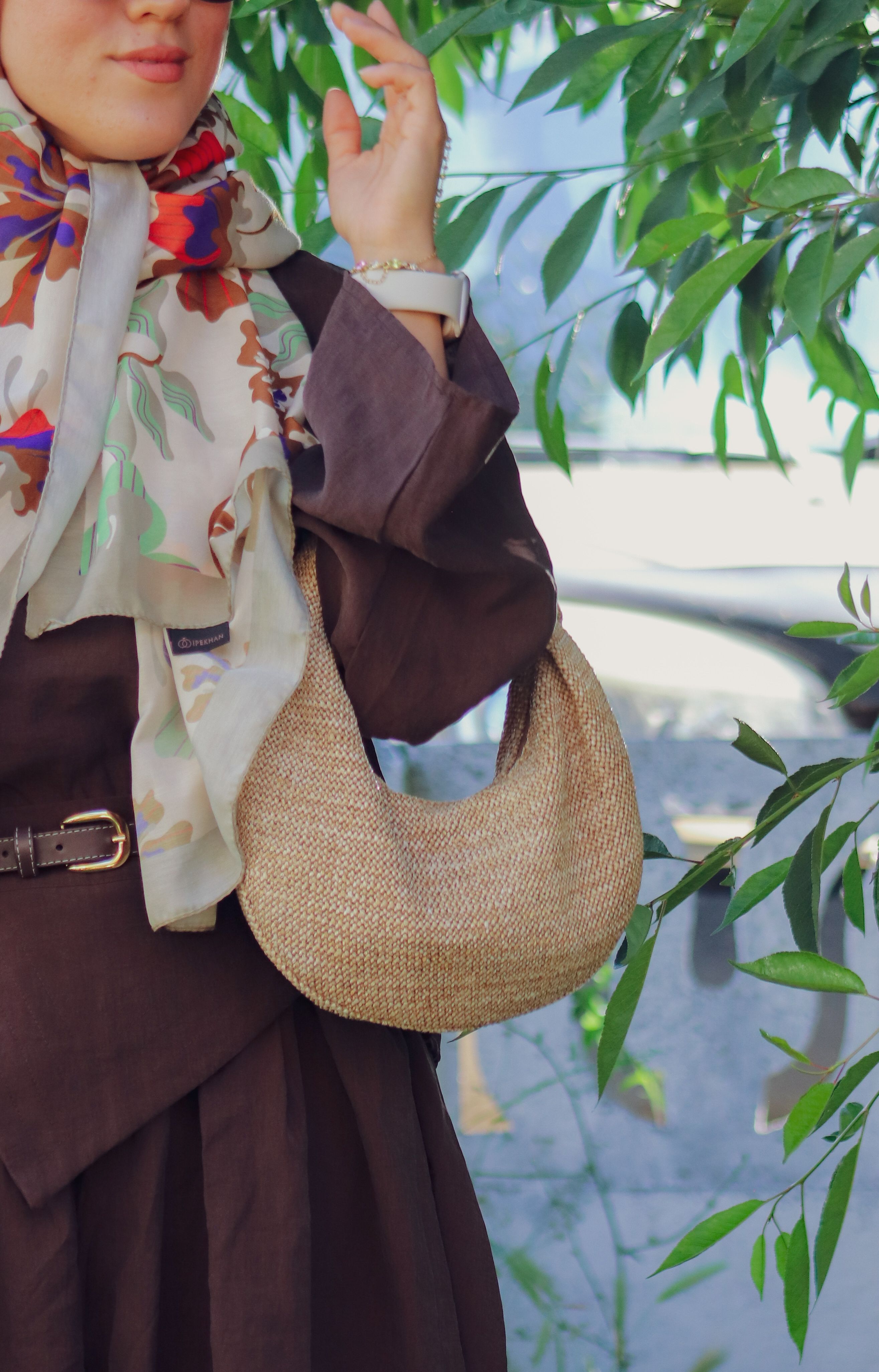
Coming to the range for the first time, sequence counts for more than budget. Buying the cheapest thing available and concluding the brand is overpriced is the classic mistake, given that a $590 wallet cannot demonstrate what a structured bag does. A better route begins with function, tests the silhouette against your actual carry, and only then looks at the number. New from the brand’s own store or an established multi-brand retailer removes authentication risk altogether, worth something at this price. Buying secondhand, stick to the platforms that authenticate in hand and stay sceptical of anything far below the figures above. The order below tends to produce the fewest regrets among first-time buyers of row handbags.
- Choose the format before anything else: tote, shoulder, crossbody, clutch or pouch
- Shortlist only the entries in that format from the table above
- If you can, handle one in a boutique or stockist, as these bags photograph badly
- Pick black or a neutral if resale matters to you at all
- At this level, buy new unless the secondhand saving is genuinely large
- Anything in the low hundreds is a counterfeit signal, not a bargain
How to Authenticate a Coach Bag
It pays to know how to authenticate a coach bag, since counterfeit coach handbags imitate the details buyers check first. The single most important point needs to come first: Coach itself does not authenticate bags for shoppers, nor does it confirm serial numbers. No phone call or email to Coach will settle the question for you. Instead, you must weigh several signals together, beginning with where the bag came from. One odd detail does not always prove a copy, while no single mark proves a bag is genuine. Each step is explained further down, and first the checklist below places them in order of usefulness. No Coach publication lies behind the physical checks, which come from resale and authentication guides.
- Establish where the bag was sold.
- Read the Storypatch or creed and touch the stamping.
- Match the code format to the stated era.
- Read an F prefix as an outlet signal, not a verdict.
- Examine the hardware, stitching and leather.
- Check whether the seller’s account fits Coach history.
- Put no weight on packaging and dust bags.
Step 1: Start With Where the Bag Was Bought
No other clue outweighs where the bag was bought. As Coach puts it, authentic goods come from its own retail stores, Coach Outlet stores, its official website and authorised department or specialty stores. Coach Outlet is Coach’s own official channel, which means Coach Outlet items are genuine Coach. A separate discount site found through a social media ad is not the official outlet, which online is a section of Coach’s own website. The scam pattern reported so far features copied photos, misspelt brand names and checkouts that take payment apps or crypto, and a coach bag sale on an unfamiliar site promising 70 to 90 percent off everything matches it. For coach clothing and shoes, the same point-of-sale rule applies, even if the code formats below describe coach sales bags. Seek a receipt or order confirmation from an official source if you are buying a secondhand coach bag.
Step 2: Study the Storypatch or Creed
Coach’s present-day name for the sewn-in leather patch is the Storypatch. It features a concise statement about Coach craftsmanship and a unique registration number, and Coach says every Coach bag has one. On its own, a patch cannot prove a bag is real: Coach presents it as a mark of authenticity, but patches can be imitated. As guides explain, the text should not be printed on the surface but pressed or heat-embossed right into the leather so that you can feel it. The stitching around the patch should look straight and even. The earlier creed, found on older bags, first appeared in the late 1960s or early 1970s without a serial number. Guides also note „Made in New York City“ on the earliest pieces and „Made in United States of America“ from the 1970s to the early 1990s.
Step 3: Line Up the Code With the Right Era
The formats below are taken from resale guides and not from Coach, and serial and style codes evolved over time. A recognised pattern of month letter, year digits and factory letter before the style number renders codes from about 1994 to about 2006 the only ones that can be decoded. A number shared by two bags is a red flag when the bag dates from before about 1994, as bags from that era carry numbers only, commonly hand-stamped and unique to each bag. No one has publicly decoded the first block of codes from about 2006 onward, so that block cannot date a bag. Not every recent code matches the descriptions guides give of new style-number formats from about 2020. No universal decoding scheme exists, so a seller who says otherwise is stretching the evidence. The table lets you check whether a code at least lines up with the era the seller gives.
| Time frame | What resale guides report | Can the code date the bag? |
|---|---|---|
| Late 1960s to early 1970s | The earliest creeds, produced without a serial number | No serial number to decode |
| Prior to about 1994 | Hand-stamped numbers in many cases, with no letters | Not possible |
| About 1994 to about 2006 | A month letter, year digits, a factory letter, a dash and the style number | Yes, by month and year |
| About 2006 onward | Letter and four digits, dash, style number | No public decoding |
| Prior to about 2020 | An F ahead of the style number on made-for-outlet items | Indicates only the outlet channel |
| About 2020 onward | Newer style-number formats | Guide descriptions are approximate |
Step 4: Get the F Prefix Right
No other code detail creates as much confusion as the F prefix. On items made for the outlet channel made before about 2020, the style number opened with an F, which sat after the dash on the creed. Made for the outlet channel, those items are genuine Coach products all the same. Certain sellers and forums regard the F as a warning sign of a counterfeit, and that belief is wrong. When Coach moved to new style-number formats around 2020, the letter also stopped being a reliable signal. A newer bag without an F is therefore not proof of a full-price boutique item. Today the most reliable way to know an item came through the coach outlet channel is a purchase from a Coach Outlet store or the outlet section of Coach’s website.
Step 5: Check Hardware, Stitching and Leather
Physical examinations help, but they remain clues rather than proof. Guides characterise genuine turnlocks and kisslocks as solid and weighty, with crisp engraving. All stitching should look straight and even throughout the bag. On vintage bags, glovetanned cowhide should soften and develop a patina with use. Plasticky or peeling material on a bag sold as vintage leather is a red flag. Guides often point to how the „C“ pattern matches up at the seams in the case of a Signature canvas coach shoulder bag. Compare every detail with close photos of the same style from an official listing, not with another resale photo.
Step 6: Compare the Story With Coach History
A seller’s account should match Coach’s own history. A „vintage 1980s Signature C“ bag counts as a red flag, since the Signature „C“ canvas only goes back to 2001. The brass turnlock was introduced in 1964, so it should not appear on a genuine bag described as older than that. The Tabby launched in 2019 and the Pillow Tabby in 2021, while the Rogue debuted in 2016 and was relaunched in 2021. August 2024 saw the Brooklyn launch; the Empire Carryall followed in February 2025. Coach Originals are brand-new reissues of archival designs and not vintage bags, even when they recreate a decades-old shape. Look closely at names too: the Swinger from 1987 and the Swing Zip from 1998 are different bags.
Step 7: Ignore the Packaging
The very easiest parts of a Coach purchase to fake are packaging and dust bags. Boxes, dust bags and other packaging can be copied cheaply and added to any bag. Guides note that counterfeits often come with a dust bag, while genuine outlet purchases may arrive without one. Therefore, a missing dust bag means little, and a perfect one tells you even less. Packaging must never drive the decision in either direction. Listings whose photos focus on boxes and dust bags instead of the patch, hardware and stitching deserve particular suspicion. Evaluate the bag itself and its purchase history, and then treat anything that comes with it as a bonus.
Where Sources Disagree and the Final Call
Authentication guides do not agree on everything, and it is better to say so plainly. Some third-party blogs claim Coach customer service will verify a serial number during a phone call, but Coach’s own brand protection guidance says it does not confirm serial numbers. Accounts of the codes used since about 2020 differ between guides and do not fit every recent bag. There is no Coach documentation for the outlet-only stamps or tag wording mentioned on some blogs, so treat them as unreliable. Guides and sources also disagree on how much outlet and full-price materials differ, and no public Coach comparison exists. A good coach review, however helpful, cannot establish that a particular bag is genuine, though it can tell you whether a style is worth buying. If the point of sale is unknown and several checks fail, walk away, and report suspected counterfeits through Coach’s counterfeit report form or hotline.
]]>Coach Tabby Bag Guide: Sizes, Styles and Prices
Among coach handbags, the Tabby now ranks among the most familiar designs of recent years. First released in 2019, it took an old shape from the brand’s archive and reworked it into a modern Coach signature. It now spans several sizes, a padded pillow version and a range of special editions, and it works as a coach shoulder bag or a crossbody. Telling which Tabby is which, and what each one should cost, can be difficult with so much variety.
From archive roots to the 2026 lineup, this guide follows the Tabby. The guide unpacks the size numbers, the main style variations and the prices observed in the US and the UK. Materials, colors and promotions all affect prices, and every price quoted is an observed market price and not a figure from an official Coach price list.
A 2019 Bag With a 1970s Starting Point
Under Stuart Vevers, whose appointment to lead Coach’s creative team had been announced in June 2013, the Tabby launched in 2019 as a new design. Although its shape was based on a bag from Coach’s 1970s archive, the Tabby itself is not a 1970s bag. This is key, as a new Tabby is a modern design rather than a vintage piece or a reissue of an old model. The photographer Juergen Teller reportedly shot „Dream It Real“, the campaign that backed the launch.
For a label that started out in 1941 as a Manhattan leather workshop making men’s small leather goods, the archive link feels fitting. Coach’s bag heritage runs through Bonnie Cashin, who brought in the turnlock in 1964. Another thread is glovetanned leather, which is credited to Miles Cahn. Bearing a much newer symbol, the Signature „C“, which dates from 2001, the Tabby coach uk outlet nonetheless draws on that sense of history. Without claiming to be old, the result comes across as rooted in the archive.
Anatomy of a Tabby
Signature „C“ hardware tops off the Tabby, which is, at its core, a structured bag. Sold by Coach as the Tabby Shoulder Bag, it comes with detachable straps that let it be worn on the shoulder or across the body. As the same bag can handle a day at the office and an evening out, that flexibility accounts for a large part of its appeal. Its structured body holds its shape, as opposed to slouchier Coach lines such as the Brooklyn, launched in August 2024.
Do not mistake it for the Rogue, a structured satchel with top handles, or the long, east-west Empire Carryall. With its neat, structured outline, it goes with anything from denim to tailored coach clothing, even as finishes vary by version, from the standard Tabby to quilted and printed editions. Because hardware, straps and finishes change between editions, you should study each product description carefully before buying.
Sizes: Tabby 20, 26 and 36
Coach uses a number in the product name to identify each Tabby size, and the Tabby Shoulder Bag has appeared in sizes 20, 26 and 36. The Tabby 26 is the in-between size and the version taken as the price benchmark in this guide. The smallest of the trio, the Tabby 20 works for anyone who carries only a few essentials. Shoppers who want the Tabby look in a bigger everyday bag are better served by the Tabby 36, the largest size.
The numbers are names rather than a full description, so study the listed measurements on Coach’s own website before choosing. Coach uses numbers in other bag names too, such as the Brooklyn 28 and the Empire Carryall 34, so confirm that the number matches the model you want. Price also moves with size: in observed listings, the smaller Tabby 20 sat below the Tabby 26. A coach tote bag or the larger Brooklyn 39 may work better than any Tabby if you need a bag for a laptop and papers.
Styles and Finishes: Pillow Quilting and Special Editions
Of all the spin-offs, the most famous is the Pillow Tabby, launched in 2021 with puffy, padded quilting. TikTok attention is reported to have fueled its rise. A smaller pillow-quilted Tabby 20 has also been listed, and Coach sells the style under names such as Tabby Shoulder Bag 26 With Pillow Quilting. „Quilted“ and „pillow quilted“ are not the same thing, since a flatter version, Tabby Shoulder Bag 26 With Quilting, also exists.
Special editions push the design further, including a Tabby 26 With American Craft Buckle and, in the UK, a Tabby 26 With Graffiti Print. The standard version was listed at a lower full price than quilted and special-edition versions in the 26 size. Coach’s own product names describe each finish, which makes them the most reliable way to identify a version. The standard Tabby 26 is the most classic option and is the benchmark against which the variations are priced.
What a Tabby Costs in 2026
The clearest price point is the Tabby Shoulder Bag 26, observed at $475 on Coach’s own website in the US. On the UK market, the same size was observed at £475, an identical number in another currency. The two figures are not directly comparable, because UK prices include VAT while US prices exclude sales tax. In a UK sale, the Tabby 26 was also seen marked down, but sale timing is not fixed and no discount is guaranteed.
By way of context, the Kisslock Frame Bag was observed at $350 and a Rogue 25 in alligator hit $8,000. This puts the standard Tabby in the heart of Coach’s price range rather than at either extreme. All of these are observed market prices rather than figures from an official price list. When the table below shows no exact figure, it means a reliable price was not captured, so consult Coach’s own website for current pricing.
| Tabby version | Market | Price observed |
|---|---|---|
| Tabby Shoulder Bag 26 | US | $475 |
| Tabby Shoulder Bag 26 | UK | £475, VAT included |
| Tabby Shoulder Bag 20 | US | Below the Tabby 26 |
| Tabby Shoulder Bag 26 With Quilting | Both US and UK | Above the standard Tabby 26 |
| Tabby Shoulder Bag 26 With Pillow Quilting | US | Above the standard Tabby 26 |
| Tabby 26 With American Craft Buckle | US | Top Tabby price observed |
| Tabby Shoulder Bag 36 | Listed | No price captured |
Buying a Tabby: Where to Go
The most reliable places to buy a new Tabby are a full-price coach store, Coach’s own website and authorized retailers. In the UK, Coach’s own website lists prices in pounds, and the department store Fenwick has also carried the Tabby 26. A coach outlet is also an official Coach channel, operating through outlet stores and an official online outlet section on Coach’s own website. Outlet assortments are not the same as full-price ranges, so never assume a particular Tabby will be in stock there.
Sites advertising Coach bags at 70% to 90% off everything should raise suspicion: that pattern has been reported for scam sites that borrow the Coach name through social media ads. Coach says it does not authenticate bags or confirm serial numbers, which means buying from a trusted source counts for more than inspecting a patch afterward. A VAT refund on in-store purchases is no longer possible for visitors shopping in Great Britain, since tax-free shopping for tourists ended on 1 January 2021.
How to Pick the Right Tabby
Shoulder and crossbody wear are equally easy thanks to the detachable straps, so start with how you plan to carry the bag. When it comes to size, go by the listed dimensions rather than the number in the name alone. Pick between the classic structured look and the softer, puffier feel of pillow quilting. Compare any special edition with the standard Tabby 26 to see how much the finish adds to the price. Leaning toward something slouchier? Then a different coach bag such as the Brooklyn may suit you better. As the Tabby dates only from 2019, any older bag with a similar shape is a different design, so keep that in mind if you want a vintage piece instead. The short checklist below summarizes the decision.
- Carrying style: shoulder, crossbody or both
- Size: Tabby 20, 26 or 36, verified against listed dimensions
- Finish: standard, quilted, pillow quilted or special edition
- Source: a coach store, Coach’s own website, an official Coach Outlet or an authorized retailer
Coach Explained: The Full Brand Guide for 2026
Coach is one of the most familiar American fashion names, and in 2026 its sales are rising sharply. The brand was founded as a small leather workshop, became a handbag specialist and now offers clothing, footwear and accessories in stores worldwide. For decades, its central idea has held firm: well-crafted leather goods priced lower than the long-established European luxury houses. That segment has been described by a federal court as accessible luxury, different from mass-market fashion and also from true luxury.
Coach’s origins, who owns and runs it, how large the business has grown and what it offers are all set out in this guide. Because the difference between a full-price coach store and a coach outlet often causes confusion, it covers that as well. All figures carry the dates of their sources, and all prices are observed market prices and not an official price list.
Humble Beginnings: A Manhattan Workshop Turned American Label
Coach’s history starts in 1941, when a modest family-run leather workshop was founded in Manhattan. In Coach’s own history, six artisans toiled in a loft on 34th Street, making wallets, billfolds and other small leather goods aimed at men. Handbags came later, and so did the Coach name, which goes back to about 1960 or 1961. Miles and couch-outlet.org Lillian Cahn were not the first owners of the workshop, even though the couple is at times wrongly described that way.
Miles and Lillian Cahn joined the business in 1946, with Miles overseeing the factory by around 1950. In 1961 the Cahns bought out the original owners and took control. Lillian Cahn reportedly suggested adding women’s handbags, a step that redefined the company. Miles Cahn is credited with developing glovetanned leather, a finish modeled on the way a worn baseball glove grows softer with use.
Bonnie Cashin and Coach
Bonnie Cashin, Coach’s first lead designer, is the designer most strongly associated with early Coach. She is reported to have worked under contract rather than as an employee, and she was never a co-founder. Coach’s own pages give her start date as both 1961 and 1962, so her start is uncertain. What is not in doubt is that she designed for Coach until 1974.
In 1964 Cashin introduced the brass turnlock closure, which Coach says was inspired by the toggle on the top of her convertible. She is also credited with side pockets, coin-purse details and brighter colors that relaxed the brand’s look. Even today, the turnlock remains one of the best-known Coach details, and it appears on bags such as the Cassie crossbody.
From Sara Lee to Tapestry: A History of Owners and Listings
Sara Lee Corporation acquired Coach in July 1985. Coach’s stock market listing took place in October 2000, after which Sara Lee is reported to have exited completely the following year. Instead of being a mid-century heritage motif, the „C“ monogram arrived much more recently: Coach introduced its Signature collection built around it in 2001. The parent company, Coach, Inc., was renamed Tapestry, Inc. on 31 October 2017, when its ticker changed from COH to TPR.
The renaming was limited to the parent company; the Coach brand, its stores and its products carried on under the Coach name. Tapestry offloaded Stuart Weitzman to Caleres in a deal that closed on 4 August 2025, wrapping up an era that started when Coach, Inc. bought the shoe label in 2015. In 2026 Tapestry owns only two brands, Coach and Kate Spade, and Coach is by far the bigger of the two.
How the Capri Deal Collapsed
Tapestry announced on 10 August 2023 that it had agreed to acquire Capri Holdings, the parent of Michael Kors, Versace and Jimmy Choo. In April 2024 the Federal Trade Commission challenged the deal, asking a federal court to block it with a preliminary injunction. A federal judge in the Southern District of New York issued the requested preliminary injunction on 24 October 2024. The decision did not settle the merits, though it kept the companies from closing the acquisition while the challenge played out.
The court’s decision accepted that an accessible luxury handbag market exists, one that is separate from both mass-market bags and true luxury. Tapestry and Capri terminated their agreement on 14 November 2024, saying the legal process was unlikely to finish before their February 2025 deadline. The acquisition was never completed, so Tapestry owns no Michael Kors, Versace or Jimmy Choo business.
Coach’s Leadership Right Now
Tapestry, the parent company, is run by chief executive Joanne Crevoiserat. Todd Kahn heads the brand itself as Coach’s CEO and brand president, a post he took on an interim basis in July 2020 and has held permanently since April 2021. The creative lead is Stuart Vevers, whose appointment was announced in June 2013.
Vevers’s debut collection for Coach was reportedly presented in February 2014, and in 2026 he continues to serve as Coach’s creative director. Before Coach, he is reported to have been creative director at Loewe following a stint at Mulberry. Under his direction, Coach has mined its archive, bringing back older designs and recasting vintage shapes into new bags such as the Tabby. His Fall 2026 collection was shown on 11 February 2026 at the Cunard Building in New York.
Coach in Numbers
Tapestry’s annual report for the fiscal year ended 27 June 2026 provides the clearest picture of Coach’s size. Coach’s net sales totaled $6,914.7 million, up 24% on the prior year, while Tapestry as a whole reported $8,004.2 million. That means approximately 86% of group sales were generated by Coach.
Coach’s directly operated store count came to 973 at the end of that fiscal year: 336 in North America and 637 internationally. A total of about 1,299 stores is also cited, but that number includes every store across Tapestry, not Coach alone. Tapestry also said the average unit retail price of Coach handbags climbed at a mid-teens percentage rate during the year. The company has linked that rise partly to reduced promotional activity.
| Metric | Figure | Timeframe |
|---|---|---|
| Net sales, Coach | $6,914.7 million, a 24% rise | Fiscal 2026 |
| Net sales, Tapestry | $8,004.2 million | The 2026 fiscal year |
| Directly operated Coach stores | 973 | As of the end of fiscal 2026 |
| Within that, North America | 336 | End of fiscal 2026 |
| Within that, international | 637 | End of fiscal 2026 |
| Brands in the Tapestry portfolio | Coach and Kate Spade only | 2026 |
What Coach Sells: Bags, Clothing and Shoes
Structured icons are paired with soft, slouchy leather in coach handbags today, as handbags remain the heart of the business. Drawing on a 1970s archive shape, the Tabby debuted in 2019; the Rogue first appeared in 2016 and returned in 2021; and the Brooklyn, a relaxed coach shoulder bag, followed in August 2024. The Empire Carryall was shown on the Fall 2024 runway and put on sale in February 2025. The Kisslock Frame Bag, reported as the opening look of the Fall 2026 show, was observed at $350, while a Rogue 25 in alligator was spotted at $8,000, the highest bag price observed. Pieces from the Coach Originals line are not vintage: the line offers newly made reissues of archive designs.
Varsity jackets in leather and in leather with wool, the brand’s first all-shearling varsity jacket, peacoats and suede coats all appeared in coach clothing for Fall 2026, showing that ready-to-wear is now a significant part of the offer. Blazers, A-line skirts and flared trousers also appeared in the same show, along with floor-length high-collar dresses and all-gender jacquard knits. Footwear includes sneakers such as the Soho Sneaker and the laceless Skate Sneaker, and fashion press noted loafers, clogs, booties and sandals for fall. Coachtopia, the circular-design sub-brand launched on 20 April 2023, sits within Coach alongside Coach (Re)Loved, a 2021 launch said to cover trade-ins, restored bags and upcycled pieces.
Coach Store, Coach Outlet or Online: Where to Buy
A full-price coach store carries the current collections, and the grandest flagships use the Coach House name. Reports say the New York Coach House on Fifth Avenue opened in 2016, and a new Coach House at 645 Fifth Avenue is reportedly targeted for 2027. Across the Atlantic in London, the Coach House on Regent Street also opened in 2016, and in the UK Coach is also sold through Harrods, Selfridges and John Lewis. Whether you want a structured coach bag, a coach tote bag or a new jacket, the full-price range is the place to shop the latest season.
Coach Outlet is Coach’s own official outlet channel, with outlet stores and an official online outlet section on Coach’s own website. In 2014, Coach’s head of investor relations was quoted saying around 85% of outlet merchandise was made for the outlet channel, but that figure is now dated, and Tapestry has since discussed bringing some full-price product into outlets. Claims that outlet bags are always worse, or exactly the same as boutique bags, go further than the public evidence. Bicester Village, Cheshire Oaks and Ashford Designer Outlet all have UK outlet stores. When searching online for the brand, shoppers can end up typing „couch“ or „cosch“, so it is worth checking that any site advertising big discounts is really Coach’s own website or a known retailer.
]]>AMIRI Prices in 2026: A Category-by-Category Cost Guide
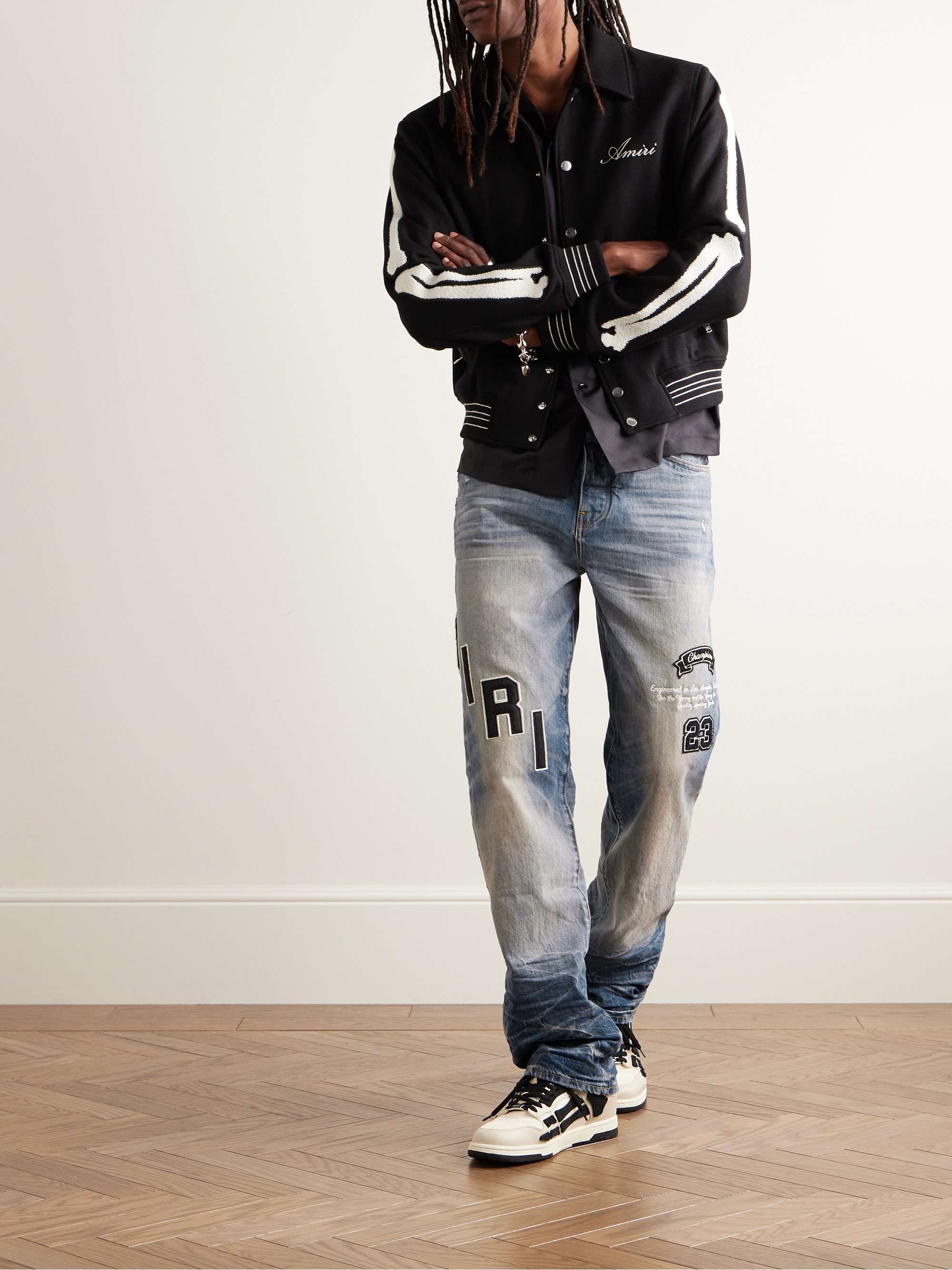
Each figure below is an observed market price, gathered from listings during 2026, and not one line of it is an official price list. No public tariff is published by the brand, prices shift between seasons and regions, and currency conversion at multi-brand retailers shifts the numbers again. Read the numbers as a map of where each category sits relative to the others, then confirm the current figure on the product page before you commit. Three bands describe the structure, jersey at the entry, amiri jeans, hoodies and sneakers through the core, and boots and worked outerwear at the top. Beyond the bands, two things shape the real cost, a discount cycle far more aggressive than the positioning suggests and a secondary market that mostly sits below retail. Both get their own section below, since ignoring either leaves you with a badly wrong picture of what this label costs.
The entry band: tees, and the figures nobody publishes
Jersey opens the range, and a T-shirt is the earliest purchase for most buyers. At authorised multi-brand retailers, observed listings place standard logo tees at roughly $425 to $460, and that is the realistic floor for a main-line piece. Above that come heavily worked graphics, oversized cuts and long-sleeve builds, with the most elaborate observed listings reaching into the $900s. Anything sitting far below the low $400s for a current-season tee is a question to ask, not a reason for excitement. One honest gap in this guide is worth stating plainly, since entry price points for socks, caps, key chains and small leather goods were not documented in the sources checked. They appear in the brand’s own accessories navigation next to bags, eyewear, scarves and gloves, though no reliable observed figures were captured for them, and fabricating numbers to fill the gap would be worse than leaving it open.
The core band and amiri jeans
The brand’s centre of gravity is denim, which also carries its most predictable pricing. Core denim opens with amirisclothing.com the Stack jean, observed at $750, a skinny cut carrying an intentional overdye and a long inseam. The signature MX1 sits at an observed $1,090, the most visible figure in the range, and the price answers to hand-distressing plus repair with pleated ovine leather. A motocross-inspired hybrid with a no-waistband construction, the women’s Baggy MX3 is observed at $990. Authorised retailers list the other cuts around those anchors across roughly $700 to $1,100, and heavily worked pieces, crystal-embellished and reconstructed denim among them, sit above the standard band. Both core styles are made in the United States, which is part of why the denim carries the pricing it does.
The core band, and the amiri hoodie
Hoodies are the second pillar of the core band, and the spread inside the category is wider than most buyers expect. Observed at $650, the MA Core Logo Hoodie is a cotton hooded sweatshirt with a kangaroo pocket, and it works as the category’s reference point. Observed listings for the wider hoodie line at authorised retailers extend to roughly $950, and heavier constructions climb past that. What drives the difference is applied work rather than fabric, since patch-covered varsity zip styles and chenille or embroidered programmes carry far more labour than a printed logo piece. That also means an amiri hoodie at the bottom of the range and one at the top are genuinely different products rather than the same garment in different colours. The bones motif running across the house turns up on several current hoodie programmes, placing them nearer the middle of the band than the floor.
The core band: amiri sneakers
Footwear falls under denim, with heavy overlap into the hoodie band. The Skel Top Low, which the brand itself calls its house signature sneaker, is observed at $650 and anchors the category. Observed at $690 is the Skel Court Hi, a separate retro court silhouette on a canvas upper, and the MA-1 sneaker is observed at $799. That last name causes constant confusion, because MA-1 denotes a bomber jacket almost everywhere else in menswear while here it is a shoe. Taking the footwear line as a whole, observed listings start at roughly $420 for slip-ons and reach about $800 at the top. Pricing on the signature model has also drifted upward over time, as resale records show it retailing at $590 at a release in August 2020, so an article still quoting that figure as current is out of date.
The top band of boots and worked outerwear
Above the core band comes anything built with substantial construction or hardware. The clearest observed marker is the Ryder Boot, listed between $1,090 and $1,290 depending on the material used for the upper. Outerwear climbs higher again, since observed listings for varsity and heavily worked jackets fall roughly between $1,800 and $2,300, with reconstructed denim outerwear inside the same territory. Flannel shirting, a founding pillar rather than an afterthought, likewise climbs into the low four figures on the most worked pieces. The price gap against the core band is easiest to justify in the hand on these pieces, because leather sleeves, applied patches and studded or embellished panels all stand for real labour. These are also the pieces that get discounted most deeply later in a season, which the section below covers.
Observed prices at a glance
Below, the individual figures cited above sit together in one view for comparison. Each figure is an observed market price drawn from 2026 listings, not an official price, and each belongs to a specific named style rather than a category as a whole. Elsewhere in this guide the ranges describe categories, which makes them a distinct kind of number entirely. Look at how compressed the core band really is, with signature hoodie and signature sneaker sharing one figure. The distance from the entry point of core denim to its most visible style is also under $350, which is narrow for a luxury range. The steepest jumps happen when you leave the core band for boots and outerwear rather than inside it.
| Style | Group | Price observed |
|---|---|---|
| MA Core Logo Hoodie | Jersey | $650 |
| Skel Top Low | Low-top sneaker | $650 |
| Skel Court Hi | High-top sneaker | $690 |
| Stack Jean | Denim | $750 |
| MA-1 Sneaker | Footwear | $799 |
| Women’s Baggy MX3 | Women’s denim | $990 |
| MX1 Jean | Signature denim | $1,090 |
| Ryder Boot | Leather boot | $1,090 to $1,290 by material |
The discounting is structural, not an accident
A guide implying this brand never goes on sale is describing some other label. Observed markdowns of 40 to 70 per cent appear in-season at authorised multi-brand retailers, and past-season stock moves through the off-price arms of established department store groups at deeper cuts again. The merchandise is legitimate and the channels are legitimate, so there is nothing suspect about buying it. It also explains the secondary market, as a visible sale floor puts a ceiling on what buyers will pay elsewhere. Standard core denim shows observed resale listings well below the $1,090 figure attached to the MX1, and standard sneaker colourways do not generally command sustained premiums. Buy these pieces to wear them, as none of this is investment advice and the observed pattern points firmly away from resale as a strategy.
The price as the warning sign
Price is among the more reliable authenticity signals, provided you know what a legitimate discount looks like. You find genuine reductions in the sale sections of named authorised retailers and their off-price arms, concentrated in past-season stock and never covering an entire catalogue at once. No authorised channel runs sitewide cuts of 50 to 80 per cent across every category including current season. It is also settled that no brand outlet exists, because AMIRI stated in a federal court complaint filed in July 2021 that it „does not have an AMIRI outlet store, nor has it ever authorized any person or business to operate such a store.“ Anyone planning to buy amiri online should therefore treat outlet branding, self-declared official discount status and catalogue-wide markdowns as disqualifying rather than as a bargain. For fairly priced amiri clothing, the safest routes remain the brand’s own site, its boutiques, and retailers named on its published stockist list.
How to Style Tory Burch Tops for Office and Off-Duty Days
A capsule of dressing built around Tory Burch tops fixes a problem that so many working women encounter each and every morning: the gap between refined and easy. Its design approach draws from fitted forms, surprising color pairings, and metal accents that feel deliberate rather than overdone. Here we unpack how to realistically style these pieces across a full week, from a Monday client meeting to a Saturday farmers market run, without starting your closet from scratch.
Tory Burch’s point of difference among competitors deserves attention before diving into outfit formulas. Preppy-meets-bohemian tailoring forms the foundation of Tory Burch’s identity, and this signature approach runs through every blouse, knit piece, and button-down. Three recurring themes emerge from a brief look through the present collection of tops: softly draping fabric choices, necklines shaped for fit and flattery, and color choices that rotate seasonally that never misses a surprising jewel-toned hue. Such insight helps when choosing complementary pieces, given that these pieces seldom require extra styling to stand out.
How to Build a Work Wardrobe Around Tory Burch Tops
Having shifted to a hybrid pattern — a split of three office days and two remote days for many workers — workplace style in 2026 asks tops to do more. Priced between $228 and $328 depending on fabric weight and print, a silk blouse from the current collection can build five different outfits as you rotate the bottoms and layering pieces around it: paired tucked-in with wide-leg trousers for Tuesday’s board meeting, then worn untucked above slim ankle pants come Thursday’s client lunch.
The „what do I wear when it’s 68 degrees in the conference room“ dilemma is resolved by structured knit tops, often priced between $178 and $248. Avoiding bulk near the wrist or collar, these tops fit smoothly under blazers, something that makes a difference when extending a hand to shake or signing paperwork across a table. Wear a ribbed knit top beneath an unbuttoned blazer, finish with gold-tone jewelry, and top it off with pointed flats or low heels — a look that holds up nicely for LinkedIn headshots too, a small but real consideration given 2026’s more visual professional culture.
For women who sit through meetings for four or five hours daily, the way a fabric moves matters more than what’s fashionable. Prioritize tory burch new collection tops noted for stretch-woven construction or a relaxed fit across the midsection — they flex along with your movements when you’re hunched over a laptop or reaching for a coffee cup without straining the stitching. A best of Tory Burch clothing roundup for office wear would reliably highlight the brand’s silk-blend blouses and merino knits over anything with a rigid, structured bodice, since they last more comfortably through a nine-hour workday.
Transitioning Tops from Desk to Dinner
What truly matters in a thoughtfully picked top becomes clear when you can’t spare a moment to go home and change. A blouse that appears buttoned-up at 9 a.m. should be able to loosen into evening mode by 7 p.m. Undo the first two buttons, switch out flats for a pair of tory sandals with a low block heel, and add a statement earring — that’s often the entire transformation. Sandals in particular do a lot of work here, since a heeled sandal comes across as more polished than a flat one but doesn’t sacrifice comfort for a four-block walk to dinner.
Getting comfortable with layers is another essential technique. A short-sleeved or sleeveless top layered under a blazer during work hours can lose that blazer come evening, especially if it has a slightly lower neckline or a subtle back detail that stayed tucked away under the jacket all day. This works especially well with tops priced in the $198–$278 range that include covered buttons or a soft shine — details that stay quiet during work hours but look elevated the moment the blazer is removed.
Choosing the right color counts for more come evening than during daytime hours, since overhead office lighting tends to flatten everything. A cobalt or emerald top that seemed only „nice“ under fluorescent light becomes truly eye-catching under dimmer evening light. That’s exactly where a seasonal Tory burch sale delivers real value — picking up 2-3 jewel-toned tops at 30-40% off means you consistently possess an option suited for evenings without shelling out full retail for something worn only a few times annually.
Weekend Looks: Easygoing, Not Careless
Different rules apply on the weekend. Instead of „polished for eight hours straight,“ the focus becomes „pulled together for however long the day runs,“ meaning comfort typically takes priority, with structure coming second. A cotton poplin or jersey top within the $128–$188 range becomes weekend-ready as soon as it’s paired with denim rather than tailored trousers. Roll the sleeves up, keep the top buttons undone, and allow the fabric to loosen rather than pressing it into a stiff shape.
Footwear handles the biggest job in weekend looks. Switching out heels for tory burch shoes in a flatter, low-wedge cut quickly transforms an outfit from „almost office-ready“ to „truly weekend-mode.“ Espadrilles, slide-style sandals, and flat ballet shoes all go effortlessly with the label’s easier, laid-back tops — picture slouchy knit pieces, cotton popovers, and lightweight linen-blend blouses that get a bit rumpled and somehow look nicer because of it. Jeans, a $158 linen-blend top, and flat sandals create a weekend uniform that handles everything from errands to laid-back brunches without needing any extra planning.
Compared to weekday styling, accessory choices on weekends shift meaningfully. Pass on structured jewelry and opt instead for something with more tactile interest — a woven-style bag, a leather cuff, and sunglasses with an oversized frame. The tops themselves already carry enough personality through prints and color, so weekend styling benefits from letting one piece lead rather than layering on competing statement accessories.
Shopping Smart: Outlet, Sale, and Full-Price Strategy
Creating such an adaptable wardrobe doesn’t require paying full retail on every piece. The tory burch outlet stocks past-season tops at discounts of 30-50% off the original price, and since the brand’s silhouettes stay fairly consistent season over season, an outlet blouse from last year still pairs seamlessly with current-season bottoms and shoes. The catch is availability — outlet inventory shifts fast and sizing runs inconsistently, so it rewards shoppers who check back weekly rather than those hunting for a single item on a single occasion.
If you’re building a top 10 tory burch wishlist instead of shopping on impulse, timing matters. End-of-season sales in July and January typically bring 40% reductions on the previous season’s blouses and knits, while the outlet adds to this with ongoing, year-round discounts on styles that didn’t sell out the first time. Signing up for early sale access — most brands, including this one, give email subscribers a 24-48 hour early-access window — really does improve your chances of securing the size and color you want before stock runs out.
The table below breaks down how three common top categories perform across price, use case, and styling flexibility, which should help prioritize where to spend full price versus where to wait for a markdown.
| Top Style | General Price Bracket | Best Occasion | Styling Flexibility |
|---|---|---|---|
| Silk Blouse | $228–$328 | Work, evenings out | High — day to evening |
| Knit Top | $178–$248 | Office, travel | Medium — layers well |
| Cotton-Linen Blend Top | $128–$188 | Casual, weekend wear | High — easily dressed down |
Final Thoughts on Building a Capsule That Works
The smartest strategy approaches each top as a versatile long-term buy as opposed to something meant for just one look. Used regularly for two years, a blouse worth $250 delivers far better value than three $80 tops each worn only twice. Start with two or three tops in silk or knit in flexible, easy-to-pair tones — navy, cream, a deep burgundy — and follow up with one or two eye-catching patterns once those core items are set.
Tops alone aren’t enough — proper footwear counts equally. Sandals suited to seasonal shifts and a modest heel for the office cover most scenarios without requiring a shoe closet’s worth of options. This way of dressing remains affordable, not costly when you watch for sale cycles, browse outlet stock now and then, and stay willing to wait for the right markdown. Handled well, a handful of well-chosen tops can genuinely carry someone through an entire year of office days as well as weekend outings.
]]>Ferragamo Bag Prices in 2026: What Your Money Buys at Each Tier
There is no one answer to what a Ferragamo bag costs, and anybody quoting one number is guessing. A ladder of four rungs is closer to the truth, and once you can see them the assortment stops looking arbitrary. Every number below is an observed 2026 market price, noted on the brand’s own US webstore across a single day in September 2026, so regard it as a snapshot, never an official price list. The individual figures move with size, colour and material. What barely moves is the ladder itself: its floor, its dense middle, its thinning top. Divided into four bands below, the range is explained rung by rung, along with what your money buys.
What You Are Buying Into Before You Look at a Price
Handbags came far later than the reputation, which dates from Florence in 1927. Bags came later: Fiamma Ferragamo began designing bags and small leather goods as accessories to footwear in 1965, and the first press coverage of a Ferragamo bag dates to 1969. The mark was restyled in September 2022, so the brand now signs itself as simply FERRAGAMO, set in a custom serif logo by Peter Saville, while the listed company is still Salvatore Ferragamo S.p.A. The two names both remain live, which is why resale sites still file salvatore bags under the older heading. Since March 2022 the creative director has been Maximilian Davis. Origin is not among the variables moving these leather handbag numbers, because all current bag product pages carry „Made In ITALY“.
What the Assortment Looks Like, Counted
The official Ferragamo shop pages for the United States listed 279 handbags on the day of research, and the category breakdown explains much of the spread. Top handles lead at 90 pieces, followed by 79 shoulder bags and hobos, 36 minis, 33 clutch and evening styles, 27 crossbodies and 19 totes, plus a handful of baskets. Because building a structured top handle is the most demanding job here, the middle and upper bands fill up. Since a compact format with good hardware costs under half what a full-size structured bag does, the floor gets pulled down by minis and clutches. The site’s own hero navigation promotes six things in order: the Cara bag, the Hug, the Soft-Bag, new styles, the Studio Bag and the Iconic Top Handle. Five of those six sit in the upper half of the ladder, which is itself a price signal.
The Four Tiers at a Glance
If you want the whole range in your head, the table below is the fastest route. These bands answer to no published tier system — observed 2026 prices do the work — because the house does not market bags this way. These bands map onto real decisions: what you buy first, what you buy when you want a recognisable silhouette, what you buy when the material talks, and what almost nobody buys. The shape carries more information than any number here: a narrow entry band and a wide core band. The fourth band is a tail rather than a shelf, a few exotic-skin pieces and special constructions. Read the first three rows as the real market and the fourth as the ceiling.
| Tier band | Range observed in 2026 | Bags in this band | What the price buys |
|---|---|---|---|
| Entry | $830 to $1,500 | Double Gancini crossbody, clutch and mini shoulder, Hobo XS, multipocket bucket | Small formats, carried by their hardware |
| Mid / core | $1,650 to $3,500 | Mini and folded totes, Soft-Bag, Hug XS, Studio Box, Sofia 2026 | The silhouettes that get recognised |
| Upper | $3,500 to $5,700 | Cara, Hug Large, Gancini python, Iconic Top Handle, Mia tote | Scale, build and rarer materials |
| Exotic / special | $7,500 to $24,000 | Hug XS exotic, Iconic Top Handle Small, Diana clutch, Studio Box Small | Skins built in tiny numbers |
Tier One: Entry Level, $830 to $1,500
The Gancini hardware family props up a floor below where most shoppers expect it. The lowest figure observed anywhere was a Double Gancini crossbody at $830, an outlier rather than a rule, since most crossbodies in that family sat between $2,400 and $2,900. Above it, the shelf builds up steadily: a Double Gancini clutch at $880, a Gancini wallet with chain at $890, and a Hobo XS at $1,090. The upper half runs from a Double Gancini mini shoulder at $1,250 to $1,490, through a mini bag at $1,350, to a multipocket bucket at $1,450. Each is a small bag designed around the hook motif, rather than reduced versions of big silhouettes, so the common thread is format and not compromise. Buying here means accepting a compact bag, and no other band offers that trade.
Tier Two: Mid and Core, $1,650 to $3,500
By some distance the widest band is also where the assortment really lives. It opens with a mini tote at $1,650 and a Gancini outline tote at $1,750 to $1,850, then a folded tote at $1,850 to $2,100 and the Soft-Bag at $2,100 to $2,950. The Hug enters here, with East-West, mini and XS versions between $2,100 and $2,650 and the medium at $3,400. The Studio Box comes in at $2,550 to $3,100, the 2026 Sofia at $2,700 to $3,200, and the Studio Soft at $3,200 to $3,600. The counts confirm what the brand’s own craftsmanship page says, naming the Hug the modern accessory icon. Want a bag that reads as Ferragamo from across a room? The conversation starts here.
Tier Three: The Upper Band, $3,500 to $5,700
The upper band is where size, structure and material compound on each other. The Cara, the architectural shoulder bag promoted hardest for autumn and winter 2026, was observed at $3,400 for the extra small and $3,700 for the small, with one version at $4,500. Large Hugs were observed at $3,600 to $3,900, and both the Hug Soft Large and the medium Hobo landed at $4,300. What the material by itself does to a price shows in two pieces: a medium Gancini handbag in python at $4,100, roughly 7.2 by 13.3 by 4.7 inches, and the Iconic Top Handle in hand-woven wicker with silk lining, observed from $3,200 to $4,800. The band’s ceiling was the large Mia tote at $5,700. None of this is a better bag than the core band, but almost everything is bigger, more structured, or made from something slower to work.
Tier Four: The Exotic Tail Band, $7,500 to $24,000
The fourth band exists; it should not shape your expectations, though. The observed figures ran from a Hug XS in an exotic skin at $7,500 and an Iconic Top Handle Small at $9,500, through a mini clutch at $15,000 and a Diana clutch at $20,000, to a small Studio Box at $24,000. This is a different kind of purchase entirely, as they are single pieces and not orderable sizes. The role they play is demonstrative, revealing what the workshops do when the constraints come off. For anyone genuinely shopping, the useful fact is that the band is thin, which means a headline price from it says nothing about the rest. It also means a bag advertised at a fraction of these numbers is not evidence of a bargain.
Where These Numbers Hold, and Where They Drift
No undercutting happens at authorised stockists; the recommended price holds, and verifying it is easy. Nordstrom, Bloomingdale’s, Saks Fifth Avenue, Mytheresa and Farfetch came up as confirmed stockists, and one listed a Hug East-West Small at $2,500 and a Hug Medium in raffia at $3,400, an exact match for the brand’s figures. Aggregators behave differently, throwing up currency-converted third-party listings that disagree with official pricing, so keep the brand’s numbers as your spine. Two verified things about discounting are worth separating: the brand keeps seasonal sale sections on its own site, and it operates stores inside outlet villages. There is no official online outlet, so an online-only Ferragamo outlet is not the brand, whatever a ferragamo sale banner claims. Pre-owned is a market of its own: reported as observed behaviour, not advice, a large suede Hug in excellent condition was seen at $2,930 against $4,300 new.
The Actual Range, and How to Use It
Strip out the tail and the picture is clean: roughly $830 to $4,800 takes in the overwhelming majority of Ferragamo bags in 2026, with a thin exotic tail above it. The recognisable Hug starts at $2,100 to $2,500 within that band, and it is the single most useful number to carry into a boutique. A Hug XS in calfskin was recorded at $2,600, about 5.5 by 8.8 by 4.3 inches with a 21.7-inch strap, which gives the figure a physical shape. The mistake most people make is anchoring on a number seen out of context, whether a $24,000 headline or an $830 outlier, since neither figure describes the bag you will buy. Work out which band you are shopping in before you look at any individual bag. Handled that way, a range that looks chaotic from outside turns into four clear decisions.
]]>Ferragamo Bags Are Made in Italy: Why, and How You Can Prove It
Country of origin is one of the few claims about a luxury handbag you can check yourself in under a minute, and with Ferragamo the check is about as painless as it gets. On the brand’s own webstore, every current bag product page shows the words Made In ITALY, while the Studio Bag collection page states that each bag in the family is crafted in Italy. That is the part you can check, and it serves as this article’s anchor. Why a Florentine house ended up making bags at all is the rest of the story, and it is context that explains the label instead of substantiating it. It is also worth separating what the company publishes from what the internet has decided on its behalf. The prices below are all observed 2026 market prices, taken from the brand’s own US webstore in September 2026.
Bags Came Late, Which Is Why the Geography Is Florentine
In 1927 Salvatore Ferragamo founded the house and built it on footwear, operating in Florence with Palazzo Spini Feroni as its home. Handbags form a second chapter, since in 1965 Fiamma Ferragamo began designing bags and small leather goods as accessories to the shoes, with the first press article featuring a Ferragamo bag dated 1969. The sequence matters to any manufacturing question, since the leather-goods business grew up inside an existing Tuscan production culture rather than being put together from scratch somewhere cheaper. A shoemaker’s pattern-cutting habits and finishing standards were already in place when the first bags appeared. The city is part of the answer too, since Florence has been a leather-working designer leather bags centre for centuries and a structured handbag asks for the same skills as a fine shoe. Made In ITALY on a current bag page is the end of a line whose beginning is footwear.
The Workshop Model, Based at Osmannoro
The documented shape of production is slight, so it is better stated precisely than embroidered. From 1967 onward the Osmannoro factory near Florence housed design and prototyping, and production was carried out through workshops located near Florence and Naples. It is a two-part structure well known across Italian leather goods, pairing a central studio that draws, models and approves with specialist external workshops that execute. That is also why made in Italy typically describes a network in this context rather than a single building. Anybody offering more detail than that about suppliers, tanneries or hide sourcing is filling a gap the company has never filled publicly. Honestly stated, the country of manufacture is documented and the individual workshop behind any given bag is not.
The One Sentence on Every Product Page
Here is the part you can verify in a browser rather than take on trust. Open any current handbag in a Ferragamo shop online, scroll to the composition and details block, and the origin line reads Made In ITALY, in that capitalisation. This held for every bag examined during research, from entry-level Gancini pieces to the exotic top of the range. One step further, and in plain words, the Studio Bag collection page states that each bag in the collection is crafted in Italy. Running the check takes seconds and gives you a first-party statement instead of a forum opinion. You also end up with a reference point for the moment a third-party listing blurs about origin, which is a common feature of listings that deserve suspicion.
The Product Code and What It Really Identifies
The other thing every current bag page shows is a two-part product code, and it is widely misunderstood. The Hug XS appears as 215975 768853, the medium python Gancini handbag as 21A894 796650, and the small Iconic Top Handle as 216176 793846. The first block is a style code, the second a variant code, and jointly they identify a model in a particular material and colour. They do not identify an individual unit, so they are not serial numbers in any meaningful sense, and whether the same digits appear stamped inside a given bag is not something the company confirms. The distinction matters the moment a seller waves a code at you as proof, since at best it shows the listing matches a real model. The code is useful in exactly one way, so use it that way: check it against the brand’s own site to confirm the bag, material and colour exist.
| Claim you will encounter | Standing | How to test it |
|---|---|---|
| Made In ITALY as printed on the product page | Present on every current bag page | Open the details block on the brand’s own site |
| Studio Bag collection crafted in Italy | Stated on the collection page | Read the collection description |
| Design and prototyping near Florence from 1967 | A matter of historical record | Background only, not visible on the bag |
| Production through workshops near Florence and Naples | Historical record | Undisclosed for any individual bag |
| Assertions about serial numbers, date codes or authenticity cards | Not brand-confirmed, blog-sourced | No published brand guide exists |
| That the product code points to one specific unit | Mistaken; it identifies model and colour | Match the code to the model on the brand’s site |
Materials Are Where the Hand Work Shows
Origin is a legal statement and craft a physical one, and the material list is the point where they overlap. Across the current line-up the official composition fields record calfskin in smooth and grained or hammered finishes, suede, python, hand-woven wicker with silk lining, raffia, canvas and jacquard. Several of those resist industrialisation, which is the point: a hand-woven wicker Iconic Top Handle lined in silk was observed at $4,800 in the small size, measuring 7.8 by 7.8 by 4.7 inches, and the weave is the entire object. The medium python Gancini handbag at $4,100, 7.2 by 13.3 by 4.7 inches, is a second case where the skin dictates cutting and matching. Hand assembly is evident even in everyday calfskin pieces such as the Hug XS at $2,600, measuring 5.5 by 8.8 by 4.3 inches, in the folded side panels and the two golden Gancio buckles. Those observed 2026 market prices track material difficulty far more closely than they track size.
Why Made in Italy Is Not a Synonym for Genuine
Origin and authenticity are separate questions, and it is worth saying so plainly. Counterfeit operations print origin labels no less freely as they lift official photography, which means the stamp on an object of unknown provenance proves nothing on its own. Origin becomes useful only in combination with channel, because a bag bought from the brand’s own site, its boutiques or a verified stockist such as Nordstrom, Bloomingdale’s, Saks Fifth Avenue, Mytheresa or Farfetch carries the claim with a chain of custody. Structurally, any site presenting itself as an official Ferragamo outlet fails the test, given that no such online channel exists and that the sole official online discount route is a seasonal Ferragamo sale section on the brand’s own site. Everything is still filed under Salvatore Ferragamo on the secondary market, which is precisely why searches for salvatore bags land there rather than on the current collection. What the company itself advises is simply buying through its website or through authorised stores and distributors.
Repair Services: the Only Physical Touchpoint
Should you want someone connected to the company to handle your bag in person, exactly one official route exists. Ferragamo offers Repair Services for a selection of authentic products, requested at selected stores with proof of purchase. The service is described as valid regardless of the country or sales channel of the original purchase, which quietly makes it the most useful physical touchpoint the brand offers. It is not an authentication service and should never be described as one, because the company publishes no authentication programme whatsoever. Even so, handing a bag across a counter to people who handle the product daily beats posting photographs to a forum. Selected boutiques also offer initials personalisation, another reminder that the physical network does things a webstore cannot.
Two Minutes of Verification, In Order
Put the pieces together and the process is short enough to do on a phone. Locate the model on the brand’s own site, read the origin line in the details block, and write down the two-part product code next to the official price. Compare the seller’s listing against all three, because a mismatch in material, colour or dimensions tells you more than a close-up photograph. Turn to the material claim next, because hand-woven wicker or python has physical characteristics a cheap copy will not reproduce even when the label is correct. Then apply the channel test, treating the brand’s own shop, its boutiques and the verified stockists as the safe list and treating anything advertising itself as an online outlet as disqualified. Last of all, ignore certificate and serial-number claims, and bring any real damage to Repair Services rather than to a stranger. A search for a feragamo bag with one r turns up plenty of sellers with a story, and the origin line on the brand’s own page is the only part you can read for yourself.